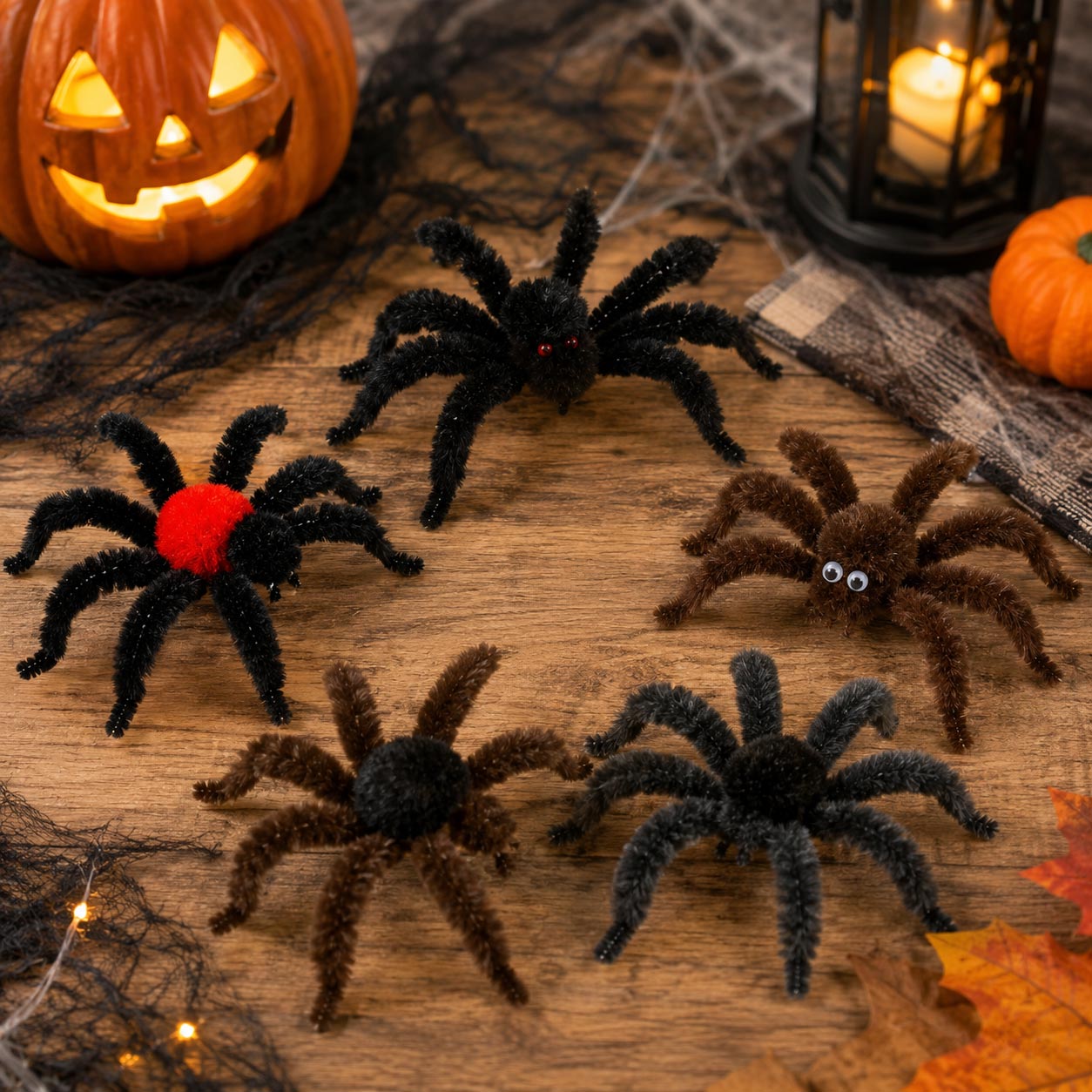
1. Cut both 12" bump chenille stems in half. Lay all four pieces together. Cut a 3 to 4" piece of regular pipe cleaner and wrap the middle of the regular pipe cleaner tightly around the center of all 4 of the bump chenille pieces to hold them together, leaving a small length of pipe cleaner extending toward both ends. This forms the legs of the spider and the 2 pipe cleaner ends will form the foundation to attach the body to.
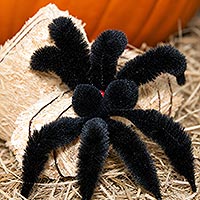
2. Bend and shape each bump chenille stem end to form the spider's eight legs. Adjust the legs until your spider can stand upright.
3. Glue 2 or 3 pom poms between the legs on top and onto the extra pipe cleaner piece. Fold over or trim any stem ends that are visible. Don't be afraid to vary the sizes of pom poms. For example, a larger pom pom at the back and smaller one at the front. One large pom pom makes a cute spider body as well as 3 smaller pom poms lined up closely together.
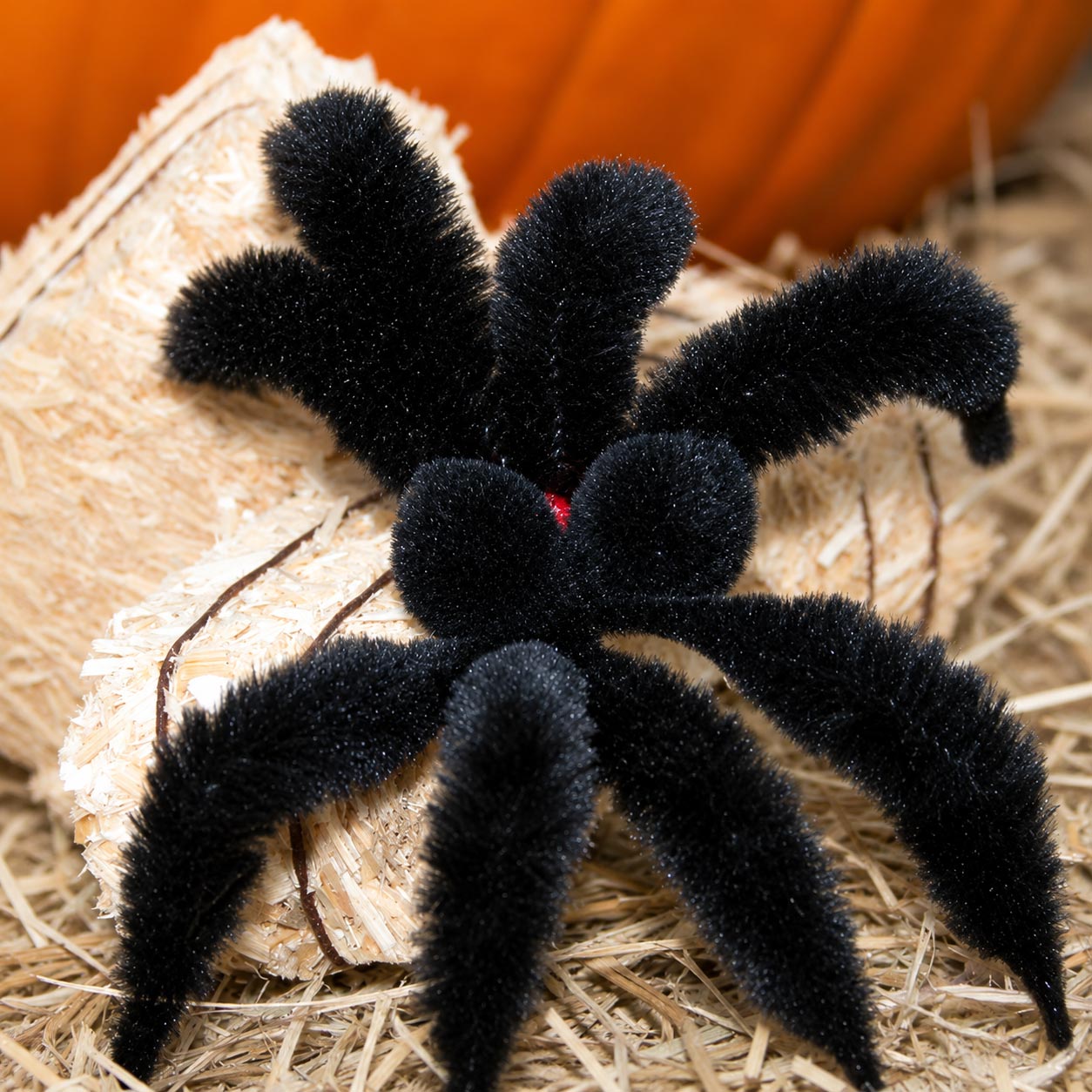
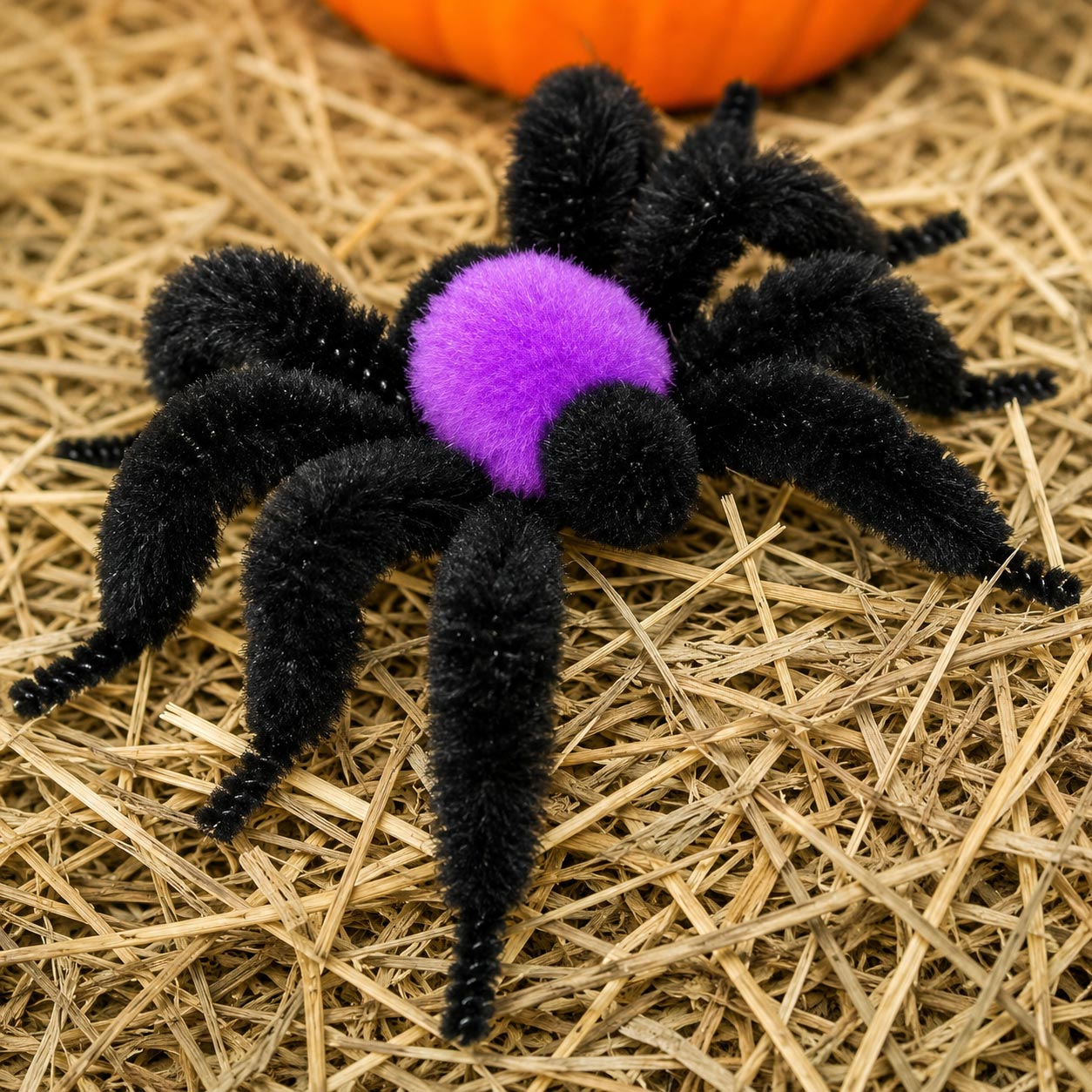
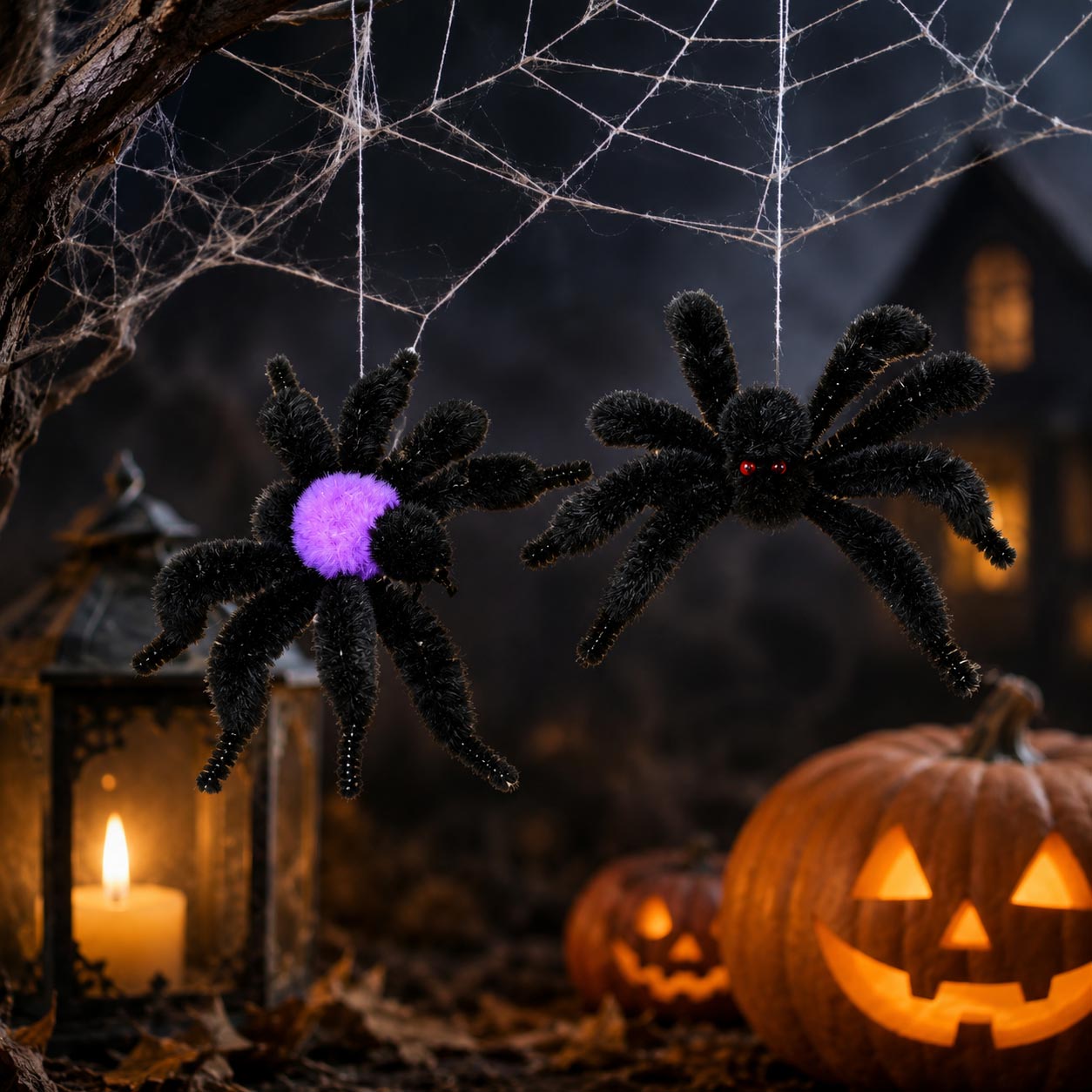
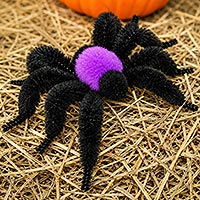
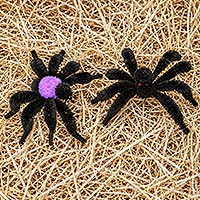
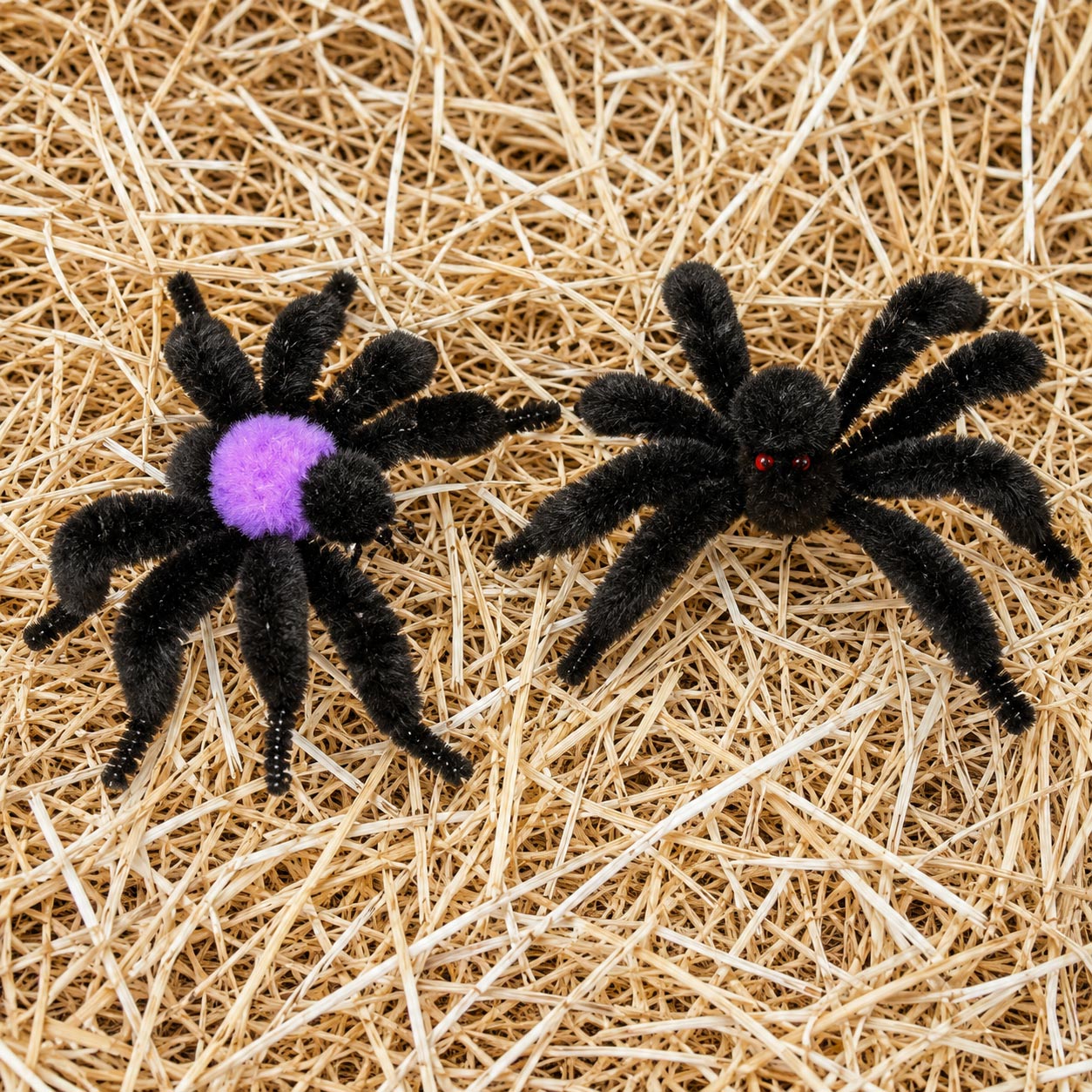
4. For our spiders shown we used red pipe cleaner piece to wrap the legs together and 2 black pom poms to simulate a black widow. To give your black widow a spooky appearance glue 2 small dark red seed beads to the smaller pom pom for eyes. On the other spider we used black pipe cleaner to wrap the legs together and attached 3 pom poms for its body in a black, then purple, then black color combination.
Make It Your Own!
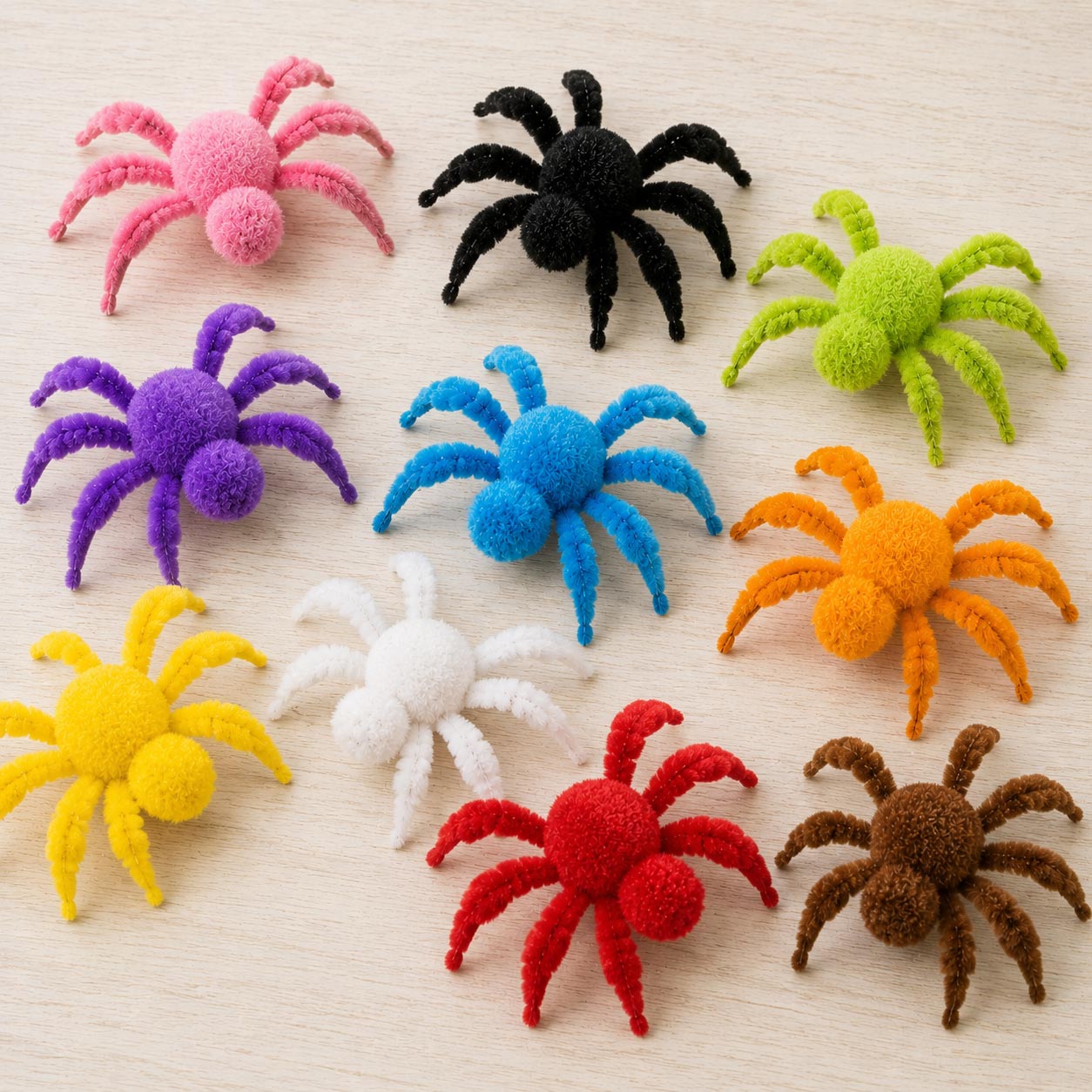
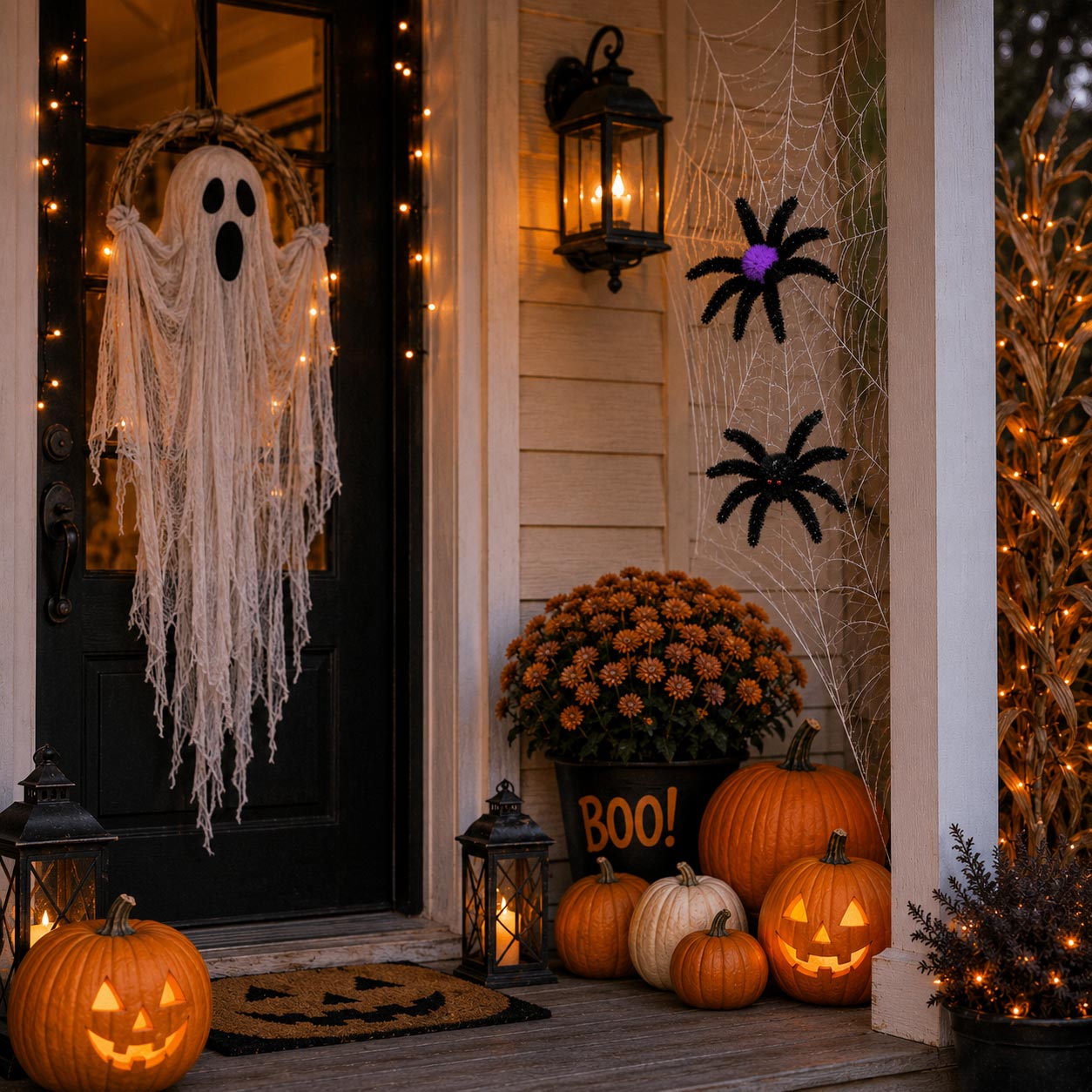
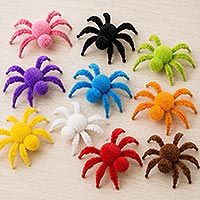 Have fun experimenting with different colors and embellishments. Create spooky black and orange spiders for Halloween, bright colored spiders for classroom crafts, or glittery spiders for a magical look or for party decorations. Add wiggle eyes, tiny pom poms, beads, or even a hanging loop so your spider can dangle from a backpack, window, or Halloween display. These spiders make great (and durable) props to add to wreaths, to sit on the side of a punch bowl or create a spider web display for your Halloween decor.
Did You Know?
Spiders are not insects. They belong to a group called arachnids. Unlike insects, spiders have eight legs and only two body sections. Scientists have identified more than 50,000 different species of spiders living around the world, on every continent except Antarctica.





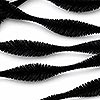 2 pcs of 12" Black Bump Chenille Stems
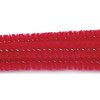 1 small length of Black or Red Chenille Stems
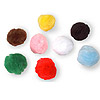 2 or 3 Black, Red or Purple Pom Poms
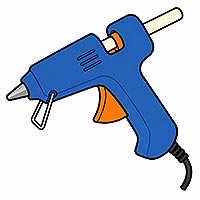 Craft Glue or Hot Gluee
 Scissors